
 EN
EN
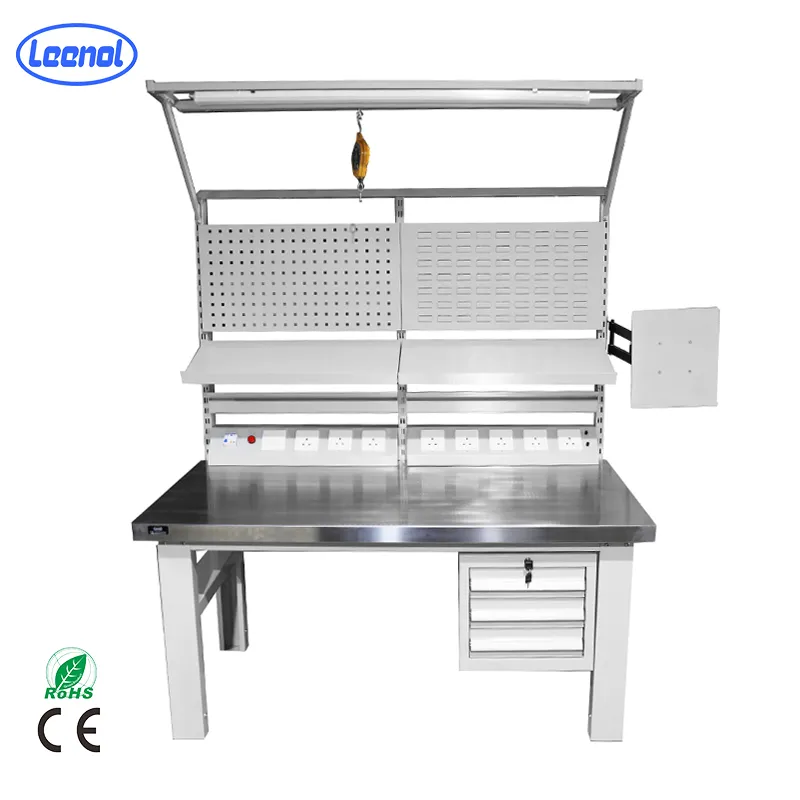
Electronics manufacturing requires the integrity of each and every component in the world. Electrostatic Discharge (ESD) is an invisible menace looming over companies that are involved in PCB assembly,which involves sensitive semiconductors,micro-chips and integrated circuits. One spark that has not been detected early may ruin the components in a moment,causing latent failures, shortened product life,and high financial cost. It is here that the purpose-built ESD workbench becomes more than mere furniture piece,it forms the backbone of quality and reliability of assembly.
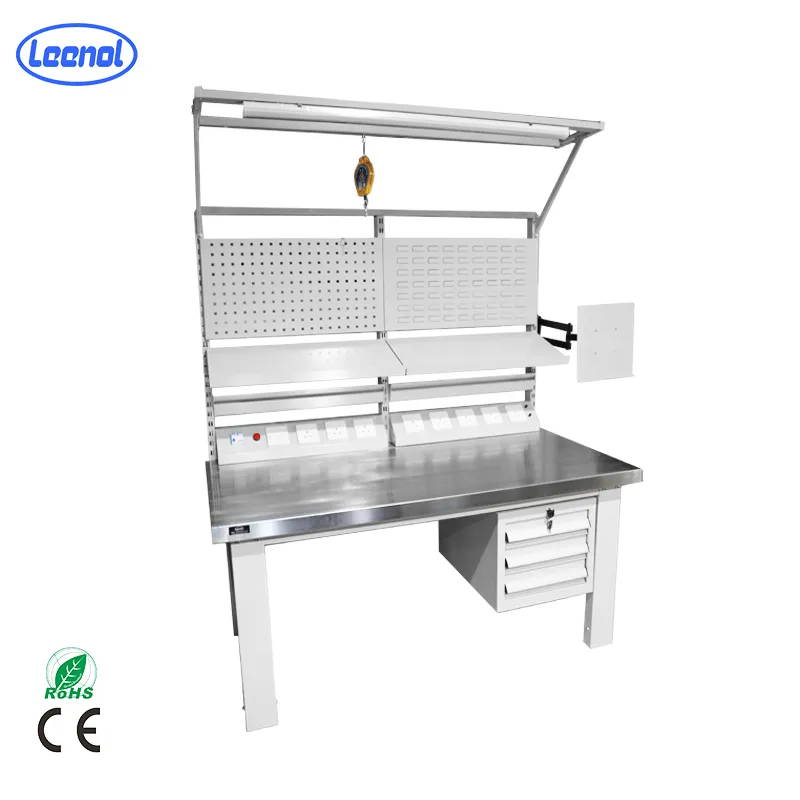
The Importance of the ESD-Safe Environment
An ESD workbench is much more than a surface of statical dissipation. It is a total controlled ecosystem, which is safe to neutralize the electrostatic charges. As part of PCB assembly,manual soldering,component placement and testing require a lot of human contact and movement,which are the major source of the generation of the static electricity. An ordinary workstation is not sufficiently shielded and the charges accumulate and discharge onto vulnerable components.
Specialized ESD workbench,e.g. those included in robust manufacturing systems,is a safe conduit in which the flow of the static charges can be directed towards ground in a non-damaging way. This system has on it the work surface and the grounding points and can be combined with other ESD controls such as floor mats and wrist straps. It ensures that all tools and components are kept at the same electrical potential to remove the potential difference that induces harmful discharges. This environment is not a choice,but the initial and most essential line of defense against disastrous and expensive ESD,to any assembly line working with modern electronics.
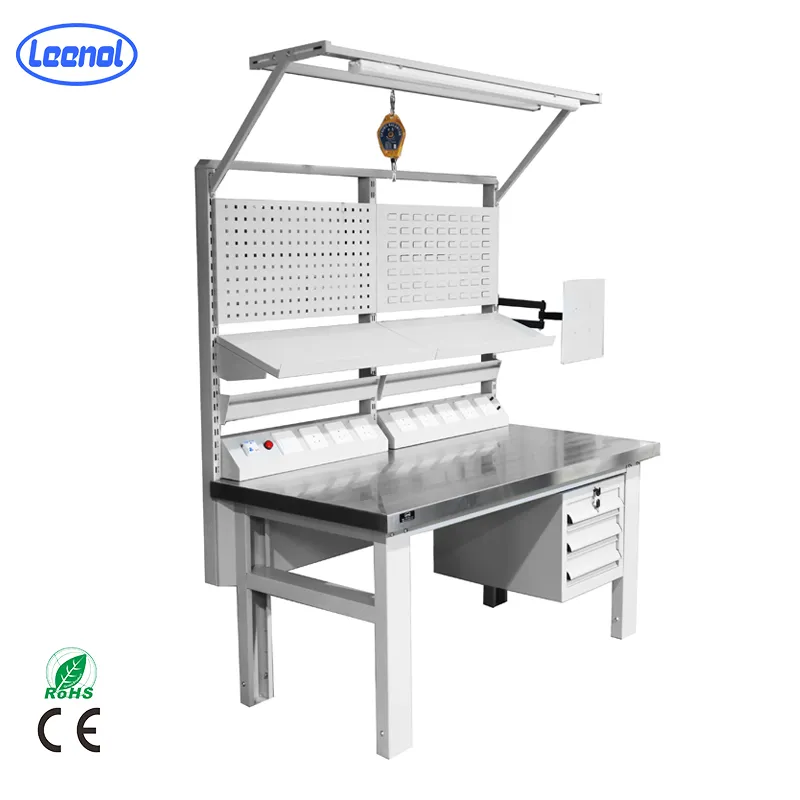
Direct Effects on the Quality and Yield of PCB Assembly
The immediate gain of application of proper ESD workbench is a quantitative increase in product quality and manufacturing yield. When the components are safeguarded against any form of static damages, the occurrence of instantaneous dead-on-arrival failures and even of more orchestrated latent failures are reduced significantly. The latent defects are the most expensive because, a defective component, even when it successfully tests at the beginning, it can fail unexpectedly in the field, ruining the brand name, and costing in terms of warranty.
Moreover, a properly developed ESD workstation contributes to increased process control and the efficiency of operational activities of operators. The possibility of physical damages and contamination is minimized as well with a special, planned place to work with sensitive assembly. It results in a more stable and dependable assembly. In the case of a business it means directly increased throughput of working boards, reduced scrap and rework rates and greater profitability. When investing in a well-built ESD foundation, the result is basically investing in predictable high-quality output.
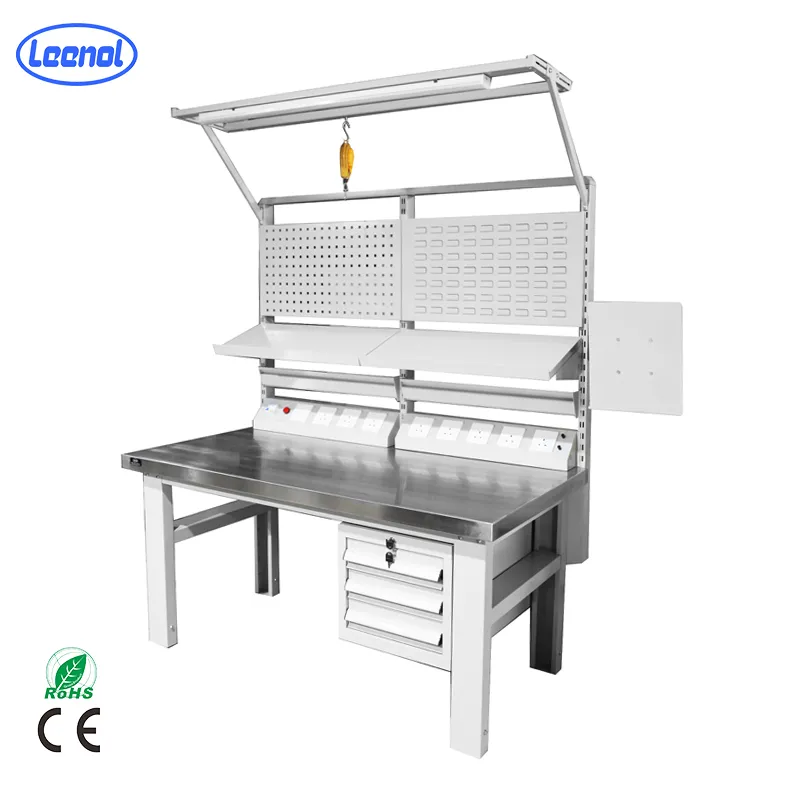
Choosing the appropriate ESD Workbench Solution
To select a suitable ESD workbench, one has to consider the particular assembly processes. The main aspects are the dissipation and resistance characteristic of the workstation, durability to overcome chemicals and mechanical abrasion, and the possibility to be successfully grounded within a bigger ESD Protected Area (EPA). Modularity and ergonomics are crucial also, because they can be customized to suit various assembly phases and give comfort to the operator in the course of extensive work.
Shanghai Leenol Industrial Co., Ltd. realizes that ESD control is a comprehensive need. The company is oriented towards offering workbench solutions which constitutes the resilient backbone of a secure assembly domain. These workstations are engineered to meet the high-performance requirements of the fragile PCB assembly of the current day by focusing on strong construction, stable use of the dissipative components, and ability to remain integrated. In a profession where a few inches can make or break a company, it is a strategic move that the company chooses to fix the assembly process at its lowest level; the workbench.