
 EN
EN

Surface-mount technology (SMT) lines need to provide more efficiency, flexibility, and reliability in the fast-paced electronics assembly industry today. Although a lot of focus is placed on the state-of-the-art pick-and-place machines and reflow ovens, the aspect on the SMT PCB magazine rack is critical and very much underestimated. In particular, the adjustable SMT PCB magazine rack has proven to be a crucial part of production lines nowadays, and manufacturers can provide a clean process and guarantee high quality.
The Role of PCB Magazine Racks in SMT Lines
PCB magazine racks are used throughout the assembly process to safely store, transport, and buffer printed circuit boards between machines. They act as a point of contact between operators, loaders, unloaders as well as conveyor systems. Without a reliable PCB storage solution, PCBs risk damage from electrostatic discharge, warping, or mechanical stress—all of which can lead to defects and costly rework.
The use of adjustable SMT PCB magazine racks has increased in the wake of the increased diversity of electronic products. They offer freedom and safety needed to work with varying board dimensions including high-volume production.
Why Adjustable Racks Are Essential
1. Accommodating Multiple PCB Sizes
Manufacturers of electronics seldom create a single type of a board. The PCBs may be of different sizes needed in smartphones, automotive modules, industrial controllers, and consumer devices. A variable SMT PCB magazine rack enables an operator to adjust the width settings swiftly, so that it is compatible with a variety of board formats. This saves the use of individual racks and simplifies the schedule of production.
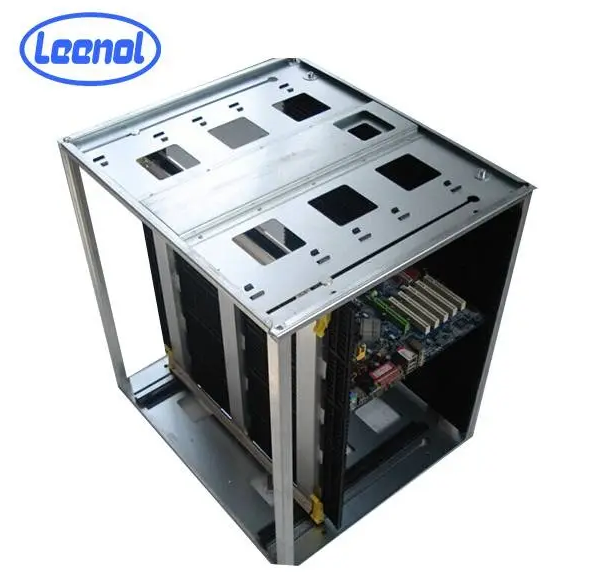
2. Ensuring Compatibility with Automation Equipment
The modern SMT is very dependent on automation. ESD SMT Magazine racks should fit harmoniously whether they are combined with loaders, unloaders or in-line conveyors. Adjustable racks do not only offer dimensional flexibility, but also guarantee a smoother fit, eliminating jamming or downtime which can cause high-throughput operations to run off track.
3. ESD-Safe Protection
ESD is a highly important concern in electronic assembly. A large number of adjustable PCB magazine racks are designed in conductive polypropylene or reinforced metal frames that have dissipation characteristics. These materials have resistance values that are safe and keep sensitive ICs and components safe in their handling and storage. Such protection is a must to the manufacturers supplying industries such as the automotive or medical electronics.
4. Durability for Continuous Use
A SMT line can be 24/7 and the racks can be loaded, transported and stored again and again. The adjustable SMT magazine racks of high quality are constructed with durable sidewalls, heat resistant materials and reinforced mechanical components. This makes them both durable to the regular handling as well as high temperatures close to reflow or wave soldering conditions.
5. Space and Workflow Optimization
Dynamically adjustable racks facilitate lean manufacturing because it lowers the amount of specialized racks. The stackable designs combined with ergonomic handling are designed to make the most out of the floor space and enhance the efficiency of the operator. In a large-volume B2B operation, this will be in the form of quantifiable cost-saving.

Benefits for B2B Electronics Manufacturers
- Versatility: One rack can support multiple product lines.
- Reduced Inventory Costs: Fewer specialized racks are needed.
- Operational Reliability: Smooth integration with automated SMT equipment.
- Improved Product Quality: ESD-safe construction minimizes component failure.
- Higher ROI: Durable, long-life racks lower replacement and maintenance costs.
Conclusion
The adjustable SMT PCB magazine rack is no longer optional--it is a requirement in current electronics assembly. Its flexibility with board sizes, ability to shield fragile parts, and compatibility with automated SMT lines are key investments that B2B manufacturers have to make.